
Developing Middle School Readers: Why Reading for Pleasure Still Matters
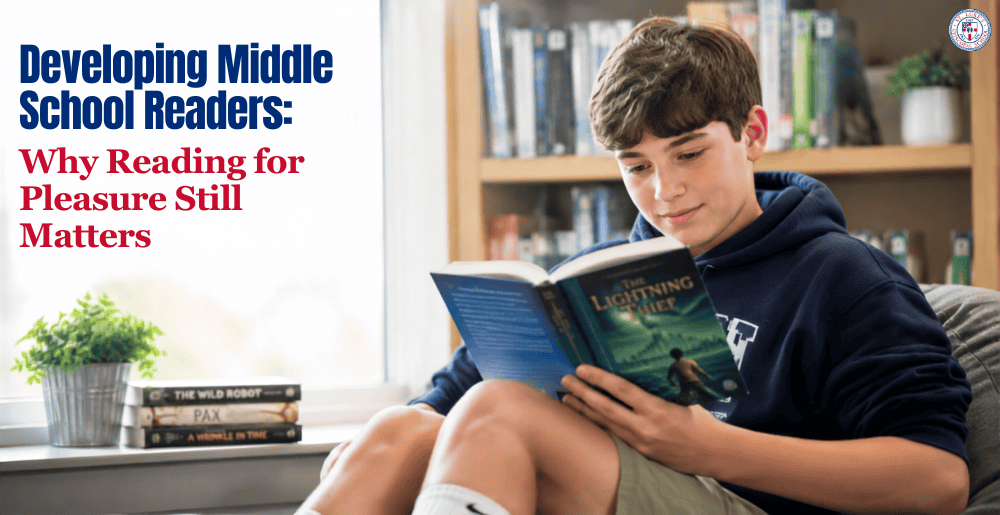
If your middle schooler used to love reading and now reaches for a phone instead, you’re not alone. Middle school is a pivotal stretch: your child is more independent, more distracted, and more likely than ever to end the day scrolling rather than reading. And yet this is precisely the age when reading for pleasure delivers some of its greatest returns, for well-being, for academic growth, and for the social-emotional skills your child is actively building.
At St. Luke’s, we believe cultivating a genuine love of reading is one of the most valuable gifts we can give your child, at school and at home. Here’s what the research shows, and what you can do about it.
What the Research Shows
Daily reading for pleasure, from a physical or digital book, not a text thread or social feed, is closely linked to improved well-being, higher academic achievement, and stronger social skills at every age. Even a modest daily reading habit can lower your child’s stress and promote relaxation: during focused reading, heart rate slows, and muscle tension decreases.
The benefits extend well beyond the page:
- Better sleep. Reading before bed helps your child fall asleep faster and improves overall sleep quality, a meaningful counterweight to the blue light and high-stimulation content of late-night scrolling.
- Stronger empathy and emotional awareness. Reading fiction builds empathy by immersing readers in perspectives and experiences different from their own.
- Higher self-esteem. Across demographics and backgrounds, reading for pleasure is associated with greater self-esteem and overall happiness.
- Sharper thinking. Regular readers tend to show improved memory, expanded vocabulary, greater cultural awareness, and stronger critical thinking, all of which support academic achievement.
- Better decision-making. Students who read for pleasure are more likely to prioritize effectively and feel confident navigating difficult decisions.
The contrast with late-night phone use is stark. Where scrolling tends to overstimulate the brain, disrupt sleep, and heighten stress and anxiety, reading offers your child a calming, restorative alternative, one they can genuinely look forward to rather than one imposed on them.
Why Middle School Is the Moment That Matters
Many kids arrive in middle school as enthusiastic readers and quietly drift away from books over the next few years, not because they’ve lost the capacity to enjoy reading, but because the routines that made reading a habit (you reading aloud, a bedtime story, a librarian’s recommendation) have fallen away and nothing has replaced them. Your middle schooler is old enough to choose their own books and young enough that a well-timed recommendation from you can still shape a lifelong habit.
Ways to Get Your Middle Schooler Reading
1. Protect a low-stakes reading window. Fifteen to twenty minutes before lights-out is enough to build a habit. The goal isn’t volume; it’s consistency.
2. Let your child choose, even if it’s “not literary.” Graphic novels, sports biographies, fantasy series, even a favorite reread, all of it counts. Choice is one of the strongest predictors of whether your middle schooler keeps reading.
3. Make books visible and accessible. A few books on the nightstand, in the car, or by the breakfast table lower the barrier to picking one up. A trip to the library together, or browsing a bookstore with no obligation to buy, keeps discovery low-pressure.
4. Ask better questions than “How’s the book?” Try: “What would you have done differently than the main character?” or “Which book do you wish you could read again for the first time?” Questions like these invite conversation instead of a one-word answer, and they show your child you’re genuinely curious about their reading life.
5. Model it. Your middle schooler notices what you do at the end of a long day. A household where you’re visibly reading, not just recommending it, reinforces the message more than any conversation can.
6. Reframe reading as a way to unwind, not just an assignment. If your child is anxious about school or struggling to fall asleep, framing reading as a way to quiet a busy mind, rather than another obligation, can change how they relate to it entirely.
7. Consider books as gifts. As the school year moves into gift-giving season, a thoughtfully chosen book, matched to your child’s actual interests, not just what’s popular, can reintroduce reading as something enjoyable rather than a chore.
A Small Shift, A Lasting Habit
Pushback on new suggestions is developmentally normal at this age, even when the suggestion (reading!) is hardly new. But small, low-pressure shifts, a book on the nightstand, a genuine question about a favorite character, a shared trip to the library, can go a long way toward helping your middle schooler rediscover reading as something they want to do, not just something they’re told to do.
We encourage every St. Luke’s family to make space for reading this season, and to see what a few quiet minutes with a good book can do for your busy middle schooler.